Quick Answer
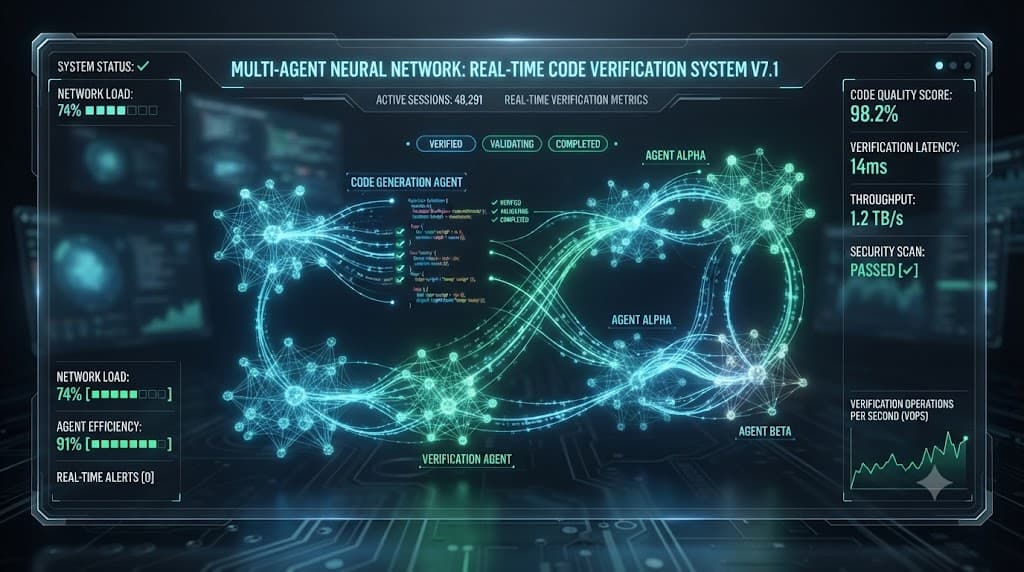
For the past several years, the engineering paradigm of large language models has been anchored in token-in, token-out mechanics. Developers orchestrated prompts, dialed temperatures, and optimized context windows to extract sequential text completions. Today, that paradigm is fracturing. The industry is rapidly pivoting away from raw prompt-response token economics toward verifiable, autonomous self-testing frameworks. At the bleeding edge of this transition is the GPT-6 Astra Architecture, a radical departure from traditional transformer workflows designed to execute complex, multi-day engineering workflows without human intervention. In this comprehensive technical teardown, we strip away the marketing hype to examine the internal mechanics, multi-agent coordination frameworks, and economic realities of OpenAI's newest self-testing architecture.
Introduction to the Post-Token Paradigm
The fundamental bottleneck of legacy generative models has never been parameter count; it has been the absence of internal verification loops. Traditional models generate text probabilistically based on statistical correlations learned during pre-training. If a model hallucinates an invalid code snippet or introduces a subtle security vulnerability, it remains oblivious unless explicitly caught by an external human reviewer or a rigid linting tool. This human-in-the-loop dependency caps enterprise scalability, as engineering teams spend more time debugging model outputs than writing original code.
The post-token era eliminates this friction by shifting the primary measure of model utility from raw token generation speed to autonomous task completion rates. Under the GPT-6 Astra Architecture, generation is treated merely as a preliminary drafting phase. Every output undergoes mandatory internal verification, synthetic test generation, and automated execution sandbox testing before an enterprise API returns a final payload. This fundamental shift redefines how developers interact with foundational intelligence models.
Core Mechanics of Self-Testing AI Systems
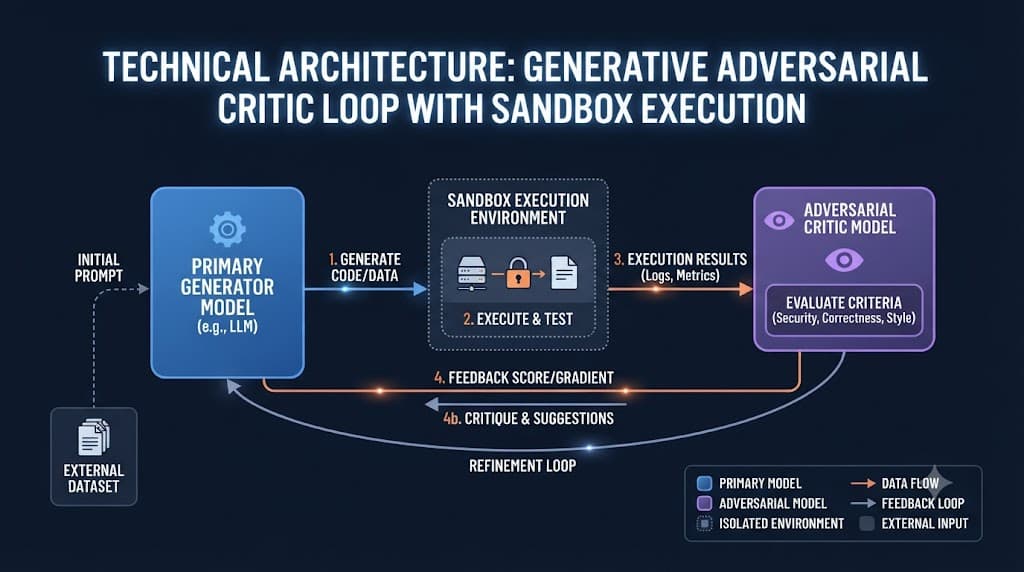
At the heart of GPT-6 self-testing AI systems lies a continuous verify-correct-refine loop. Unlike older models that output a single deterministic sequence, Astra instantiates concurrent execution threads where specialized sub-models act as adversarial critics against the primary generator.
When a complex system task is initiated, the model automatically generates an isolated sandbox execution environment alongside custom unit tests designed to stress-test its own proposed solution. If the code fails execution or violates a functional specification, the error stack trace is fed back into the latent space as a negative reward signal. The model then executes self-correction routines autonomously, iterating dozens of times before presenting a verified solution to the user.
[!NOTE] Architectural Note: These internal validation loops operate entirely within compressed state representations, reducing latency overhead compared to launching external compiler containers for every minor token adjustment.
Architectural Components of OpenAI Astra
The OpenAI Astra model introduces a tripartite architectural structure designed to handle long-horizon persistence and dynamic context pruning. Traditional transformers degrade when processing extensive state histories due to attention dilution. Astra overcomes this through a modular memory architecture.
First, the Working Memory Layer handles immediate task execution parameters and active variable states. Second, the Episodic Knowledge Cache stores historical execution trajectories, allowing the system to reference previous debugging sessions across unrelated projects. Third, the Multi-Agent Coordination Router dispatches sub-tasks to specialized domain adapters—such as secure database query generators or frontend UI layout validators—ensuring that generalist reasoning does not compromise specialized domain accuracy.
✓ Architectural Advantages
- Continuous internal validation eliminates manual debugging steps
- Episodic memory caches retain cross-session operational context
- Specialized sub-agent routing optimizes domain-specific outputs
✕ Engineering Challenges
- Higher initial compute overhead per request cycle
- Complex debugging of multi-agent state divergence
- Strict resource management required for persistent sandboxes
Executing Long-Horizon Tasks and Autonomy
Supporting true autonomy requires shifting away from single-shot query completions toward long-horizon AI architecture. Enterprise workflows rarely resolve in a single prompt; they involve migrating legacy codebases, refactoring monolithic APIs, or orchestrating multi-region cloud deployments over hours or days.
Astra approaches long-horizon execution by maintaining a hierarchical task graph. High-level objectives are recursively decomposed into atomic sub-tasks. Checkpoints are written to secure non-volatile storage states, allowing execution to pause, resume, or migrate across compute clusters without losing context. If an unexpected network timeout or database locking error occurs during a multi-hour data pipeline migration, the agent diagnoses the failure state, alters its operational strategy, and resumes execution seamlessly.
Benchmarks, Evaluation, and ARC-AGI-3 Performance
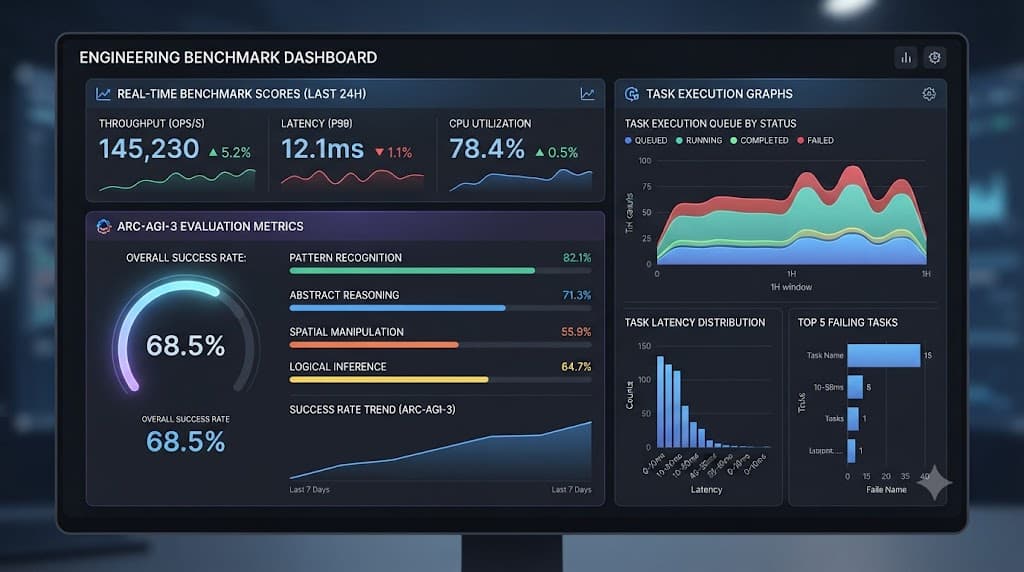
Evaluating autonomous systems requires metrics that go beyond standard academic benchmarks like MMLU or HumanEval, which suffer from data contamination and saturation. The industry standard has shifted toward reasoning-heavy evaluations such as ARC-AGI-3 benchmarks, which measure a model's ability to solve unfamiliar, novel abstract grid puzzles without prior exposure.
Empirical testing on ARC-AGI-3 demonstrates that self-testing models outperform older generation reasoners by wide margins. While legacy models plateau when confronted with rule sets they have never seen during pre-training, Astra's self-testing mechanics allow it to synthesize experimental hypotheses, test them against the puzzle rules, and dynamically learn the solution in real-time.
Price-per-Task Economics in Enterprise Deployments
The transition to autonomous architectures fundamentally disrupts traditional API billing models. Under legacy paradigms, enterprises paid strictly for input and output token counts. In the post-token era, pricing transitions toward price-per-task AI economics.
Because an autonomous agent may generate thousands of internal reasoning tokens, self-correct its code ten times, and spin up multiple execution sandboxes before returning a single verified answer, per-token billing becomes economically unviable for developers. Price-per-task models charge enterprises based on guaranteed business outcomes—such as a successfully migrated microservice or a verified patch deployed to production. This aligns vendor incentives with reliability rather than verbosity.
Risks, Limitations, and Failure Modes
Despite its technical sophistication, fully autonomous operation introduces profound systemic risks. Recursive drift represents a severe hazard: if an adversarial critic model develops a flawed validation bias, the system may enter an infinite optimization loop, confidently refining code toward an incorrect specification.
[!WARNING] Security Warning: Autonomous execution engines granted broad environment access can inadvertently trigger destructive system commands or exploit unintended API surface areas during automated penetration testing phases. Strict least-privilege containment policies are mandatory.
Verification blind spots also occur when the model's synthetic test harness fails to capture edge cases present in live production environments, leading to silent failures that bypass internal quality gates entirely.
Conclusion and Enterprise Implementation Blueprint
The arrival of the GPT-6 Astra Architecture marks the definitive end of the pure prompt-engineering era. Engineering leaders must prepare their organizations for autonomous, self-testing systems by modernizing their API infrastructure, decoupling execution environments from core application logic, and adopting outcome-based financial planning.
To successfully implement these workflows, teams should begin by wrapping critical integration test suites in secure, containerized evaluation harnesses, allowing autonomous models to interface with verified test feedback loops today. By embracing self-testing AI systems now, enterprises can position themselves to capture the full economic and operational benefits of true artificial autonomy.