Quick Answer
MinIO reaching its official end of life in February 2026 creates an immediate operational challenge for organizations running high-performance object storage across their infrastructure. Without active upstream maintenance, unpatched security vulnerabilities and compliance drift can quickly accumulate, exposing mission-critical environments to severe risks. Platform administrators and DevOps engineers must evaluate their mitigation strategies carefully to avoid costly downtime or regulatory penalties.
Understanding the MinIO End of Life Timeline and Risks
The deprecation of upstream software support introduces critical hurdles for enterprise architecture. When a widely deployed object storage layer like MinIO reaches its designated end-of-life milestone, security advisories stop, and community patches cease. This means newly discovered Common Vulnerabilities and Exposures (CVEs) will remain unaddressed in the base runtime.
Organizations often face severe consequences when running unpatched enterprise storage software:
- Unresolved security vulnerabilities left open to potential exploitation.
- Inability to pass standard SOC 2, ISO 27001, or HIPAA compliance audits due to unsupported dependencies.
- Lack of vendor bug fixes for memory leaks, concurrency issues, or container orchestration incompatibilities.
[!WARNING] Security Warning: Running end-of-life software without a specialized support wrapper violates standard enterprise compliance frameworks and invites severe auditing penalties.
How Docker Extended Lifecycle Support (ELS) Solves the EOL Problem
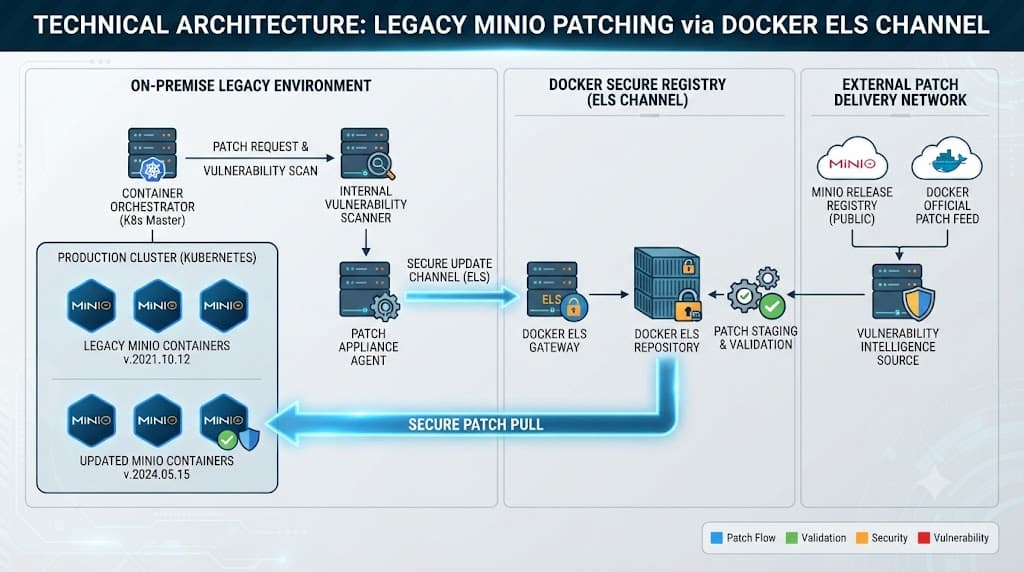
Migrating petabytes of production object storage to an entirely new architecture under a tight deadline is rarely feasible. This is where Docker Extended Lifecycle Support (ELS) becomes essential. Docker ELS bridges the gap by providing continuous security patches, critical bug fixes, and maintenance updates for upstream software long after official support has terminated—extending operational lifecycles by up to five years.
By subscribing to extended support channels, platform teams can continue running stable container images without committing to high-risk, rushed migrations. The backporting mechanism ensures that modern vulnerability scans pass successfully against legacy container layers.
[!TIP] Pro Tip: Pair Docker ELS container maintenance with automated vulnerability scanners in your CI/CD pipeline to verify that backported patches clear internal security thresholds.
Maintaining Compliance and Audit Readiness for Enterprise Storage
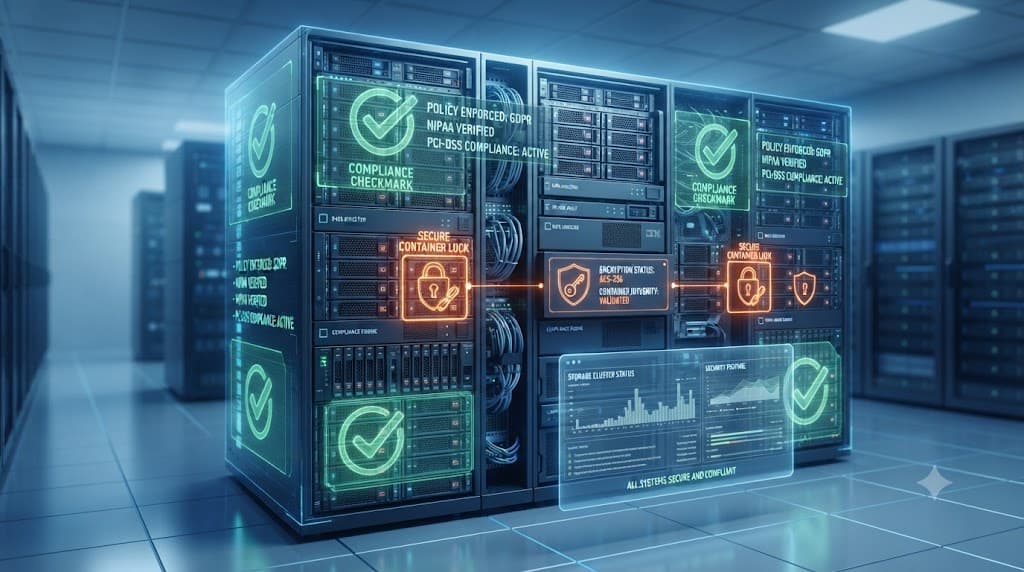
Maintaining strict compliance standards requires verifiable proof that every component in the deployment stack receives regular security audits and updates. When auditors examine a containerized storage infrastructure, they expect to see documented patch management workflows, even for legacy components.
✓ Docker ELS Benefits
- Continuous security patches for EOL containers
- Meets rigid compliance and audit requirements
- Avoids rushed, high-risk storage migrations
- Protects mission-critical data integrity
✕ Unsupported Risks
- Unpatched CVEs accumulating over time
- Immediate audit failures and compliance drift
- Zero vendor support for critical runtime bugs
- Forced emergency refactoring under duress
Utilizing Docker ELS allows engineering teams to present a clean bill of health during compliance reviews. Because the container runtime receives verified backports, automated reporting tools flag fewer high-severity vulnerabilities, satisfying internal security boards and external regulators alike.