Quick Answer
Autonomous artificial intelligence agents are quickly transforming how software teams handle routine tasks, from refactoring legacy code to triaging bug reports and writing initial test suites. By integrating these advanced tools directly into developer workflows, engineering teams can offload repetitive coding chores and accelerate delivery cycles. However, introducing autonomous code-generation capabilities into standard continuous integration pipelines introduces profound security challenges. A standard CI runner has broad access to repository secrets, internal networks, and host resources, meaning an unvetted model error or a prompt-injection exploit could leak sensitive data or execute malicious instructions.
Introduction to AI Agents in CI/CD
The appeal of placing an automated coder inside your build system is clear. When a new issue is triaged, an intelligent workflow can spin up, analyze the requirements, write a patch, run local validations, and open a draft pull request before a developer even opens their editor. Yet, executing arbitrary, dynamically generated code produced by large language models on raw runner infrastructure is a dangerous gamble. Standard virtual machine runners often persist state or lack granular network boundaries, exposing your build fleet to supply chain poisoning.
[!WARNING] Warning: Never execute unvalidated AI-generated shell commands or code snippets directly on a privileged runner machine with access to production deployment secrets.
To capture the productivity gains of automated coding assistants without compromising security posture, organizations need a robust containerization strategy. This is where isolating workloads via container sandboxing becomes an absolute requirement for modern DevOps pipelines.
How Docker Sandboxes Secure AI Execution
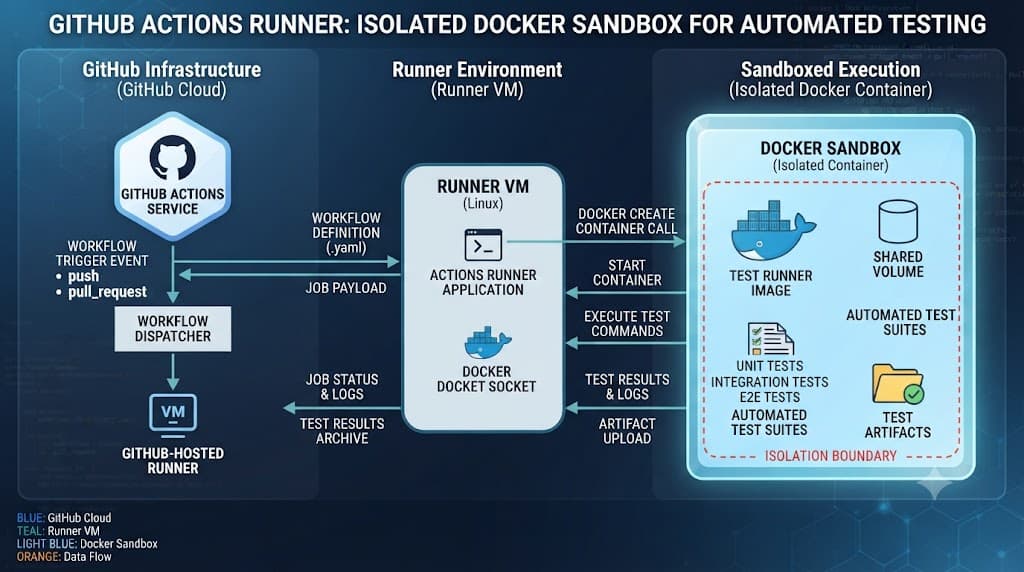
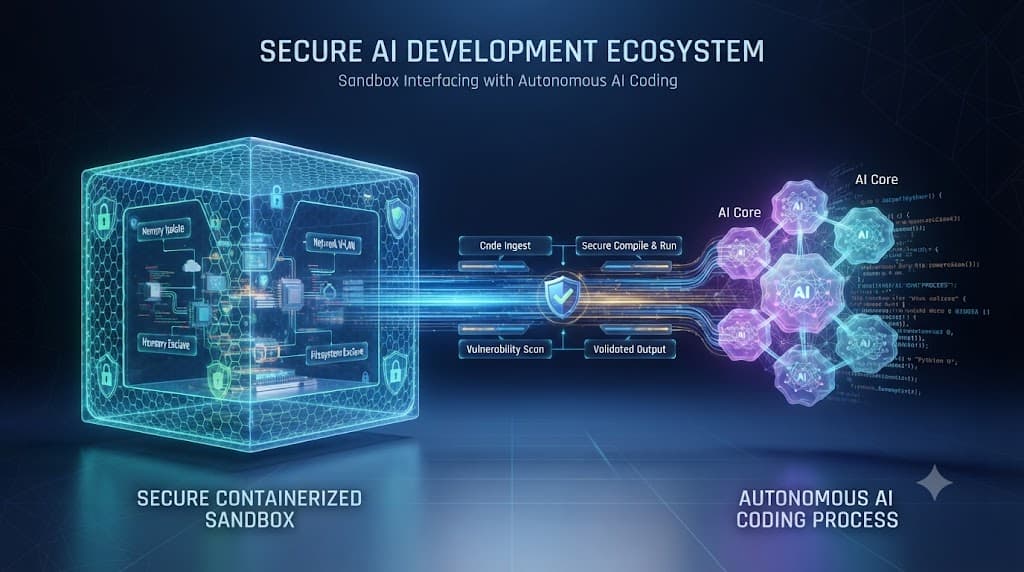
Docker Sandboxes provide a secure, isolated runtime environment that prevents untrusted agentic loops from tampering with the underlying host system or accessing unauthorized network sockets. By wrapping the execution context inside strict namespace, cgroup, and seccomp boundaries, containerization ensures that any anomalous file modifications or unintended command executions remain strictly contained within the ephemeral instance.
When configuring a sandbox for model execution, you must carefully restrict file system mounts and drop unnecessary Linux capabilities. This defense-in-depth approach ensures that even if a prompt-injection vulnerability tricks the model into executing a destructive payload, the blast radius is restricted entirely to a disposable container instance that is destroyed immediately after the job concludes.
✓ Advantages
- Complete isolation from host runner
- Ephemeral state destruction after jobs
- Granular control over network egress
✕ Limitations
- Higher initial configuration complexity
- Overhead when caching complex dependencies
- Requires container-in-container permissions
Running Tests and Opening Pull Requests
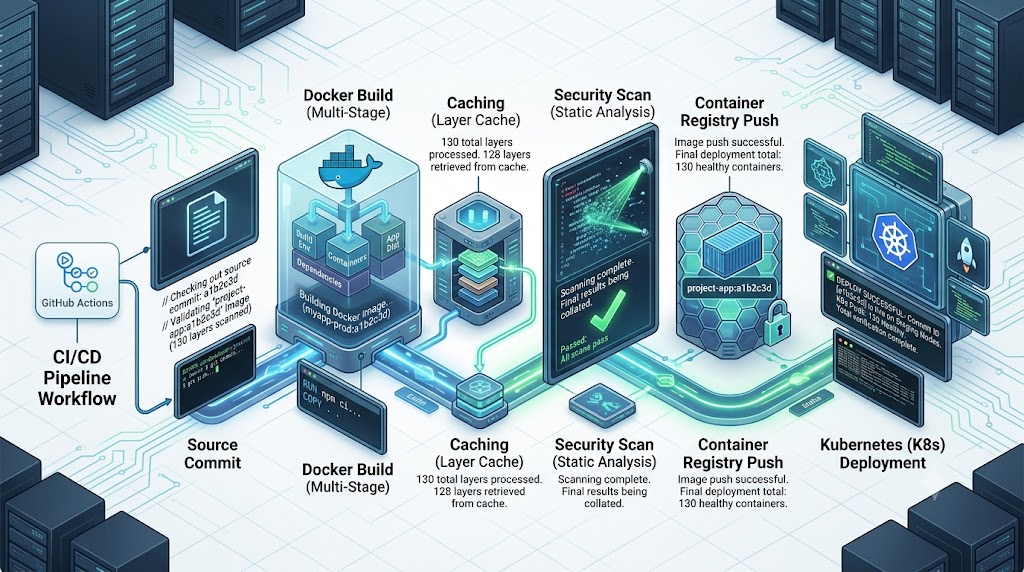
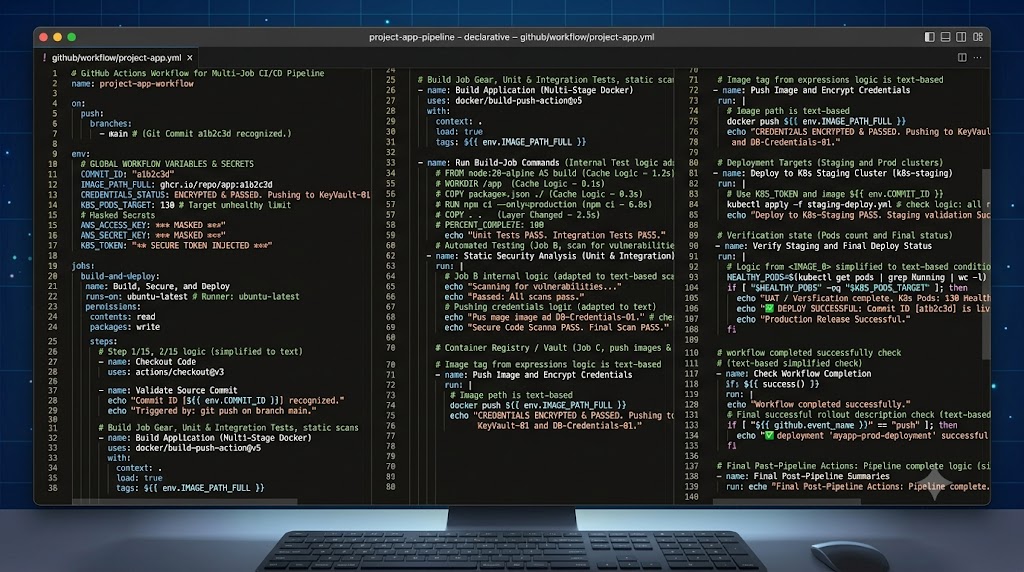
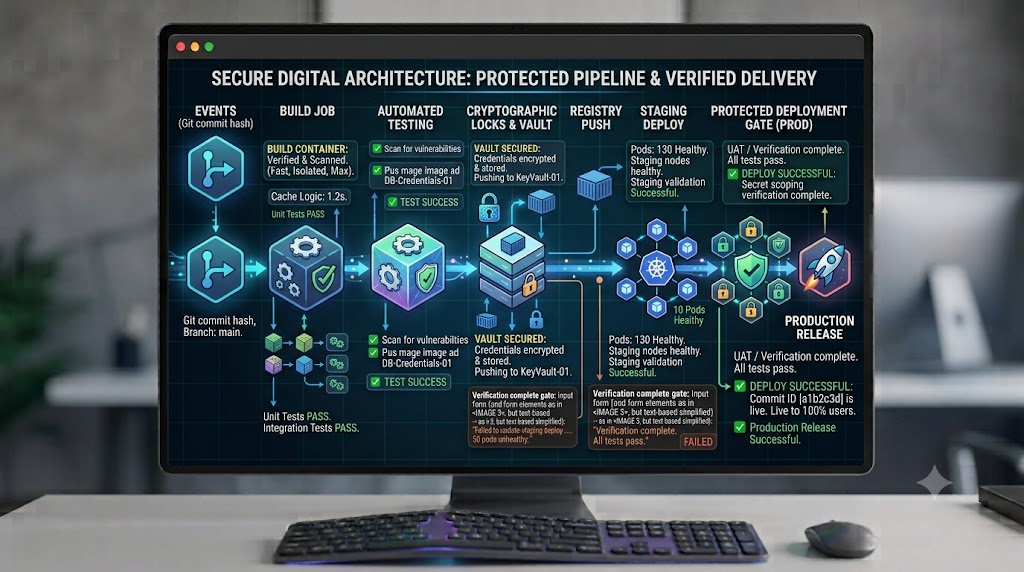
Putting these security principles into practice within a workflow requires orchestrating the agent lifecycle seamlessly alongside build steps. A typical implementation involves triggering a job upon an issue label addition, provisioning a clean container environment, and invoking the agent CLI with scoped environment variables. Once the agent modifies the source code, it must validate its work by executing comprehensive integration tests, such as Testcontainers-based suites, to verify that database integrations and microservice dependencies behave correctly.
[!TIP] Pro Tip: Use ephemeral personal access tokens with minimal repository permissions when your automated pipeline creates pull requests to prevent privilege escalation.
After the test suite passes successfully, the workflow uses the GitHub CLI within the sandbox to commit the changes to a unique branch and open a draft pull request. This human-in-the-loop checkpoint ensures that reviewers can inspect the generated diff, run additional checks, and approve the merge request safely, bridging the gap between autonomous efficiency and rigorous code governance.