Quick Answer
Evaluating autonomous AI agent frameworks requires looking past marketing claims to examine core architecture, tool execution loops, memory persistence, and extension mechanisms. When developers analyze open-source agent ecosystems, two platforms frequently emerge in discussions: Nous Research's Hermes Agent and OpenClaw. This guide provides a neutral, evidence-based comparison of hermes agent vs openclaw, examining their documented capabilities without declaring an arbitrary overall winner. Whether you are exploring hermes agent alternatives or trying to select the right platform for a production deployment, understanding how each framework handles models, tools, and execution flows is critical for making an informed architectural decision.
Quick Answer: Comparing Hermes Agent and OpenClaw
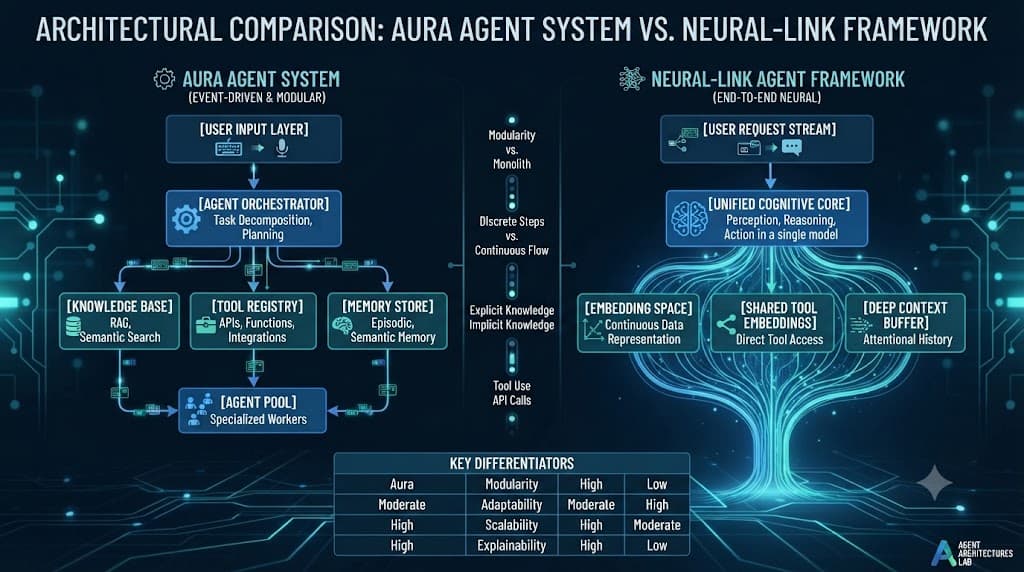
When comparing hermes agent vs openclaw, developers must evaluate how each framework approaches agent loops and runtime environments. Hermes Agent, developed by Nous Research, focuses heavily on tight integration with frontier language models, structured tool use, and optimized reasoning trajectories. OpenClaw emphasizes a modular gateway architecture designed for multi-channel tool execution and autonomous event-driven workflows.
[!NOTE] Background Note: Both platforms evolve rapidly. Always verify the specific release tags and commit histories in their respective repositories before committing to a long-term production architecture.
To give developers a high-level overview of how these two frameworks stack up across key engineering dimensions, the following breakdown contrasts their core design philosophies:
- Primary Focus: Hermes Agent prioritizes advanced reasoning loops and structured model interactions; OpenClaw prioritizes extensible gateway routing and channel integrations.
- Integration Paradigm: Hermes Agent relies heavily on native tool declarations and structured output schemas; OpenClaw leverages flexible protocol bridges and modular toolsets.
- Target Audience: Both target software engineers and AI developers, though Hermes Agent leans toward researchers and prompt-engineering specialists, while OpenClaw appeals to infrastructure and automation builders.
Core Architecture and Design Philosophy
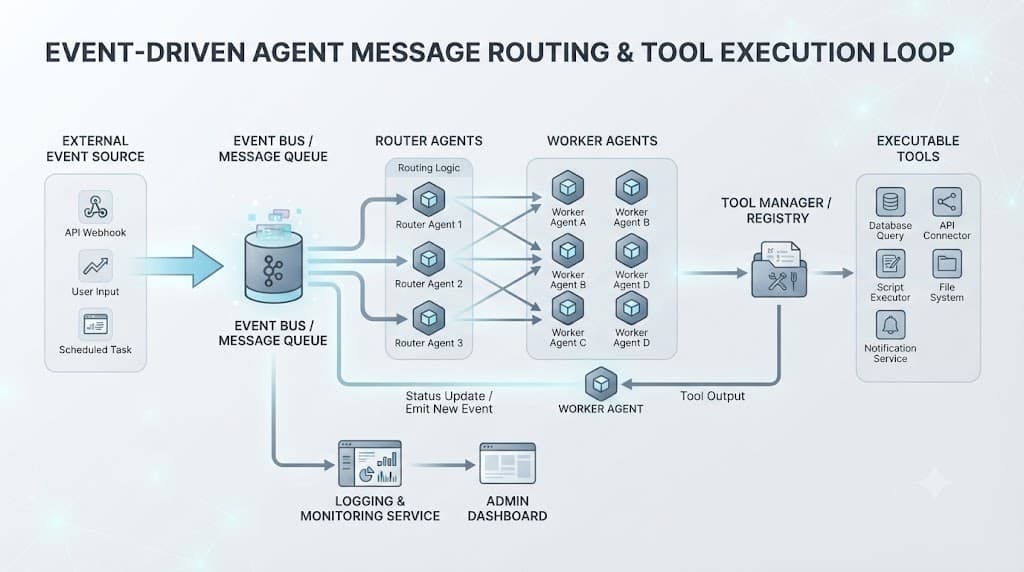
Understanding the underlying architecture of an AI agent platform dictates how easily it can be scaled, debugged, and integrated into existing enterprise pipelines. Nous Research designed Hermes Agent to act as an agile reasoning engine capable of maintaining long-horizon task execution without losing context or deviating from system prompts.
OpenClaw takes a slightly different structural approach, utilizing a decoupled architecture where the agent core communicates through an intermediary event dispatcher. This allows OpenClaw to handle asynchronous events, incoming webhook triggers, and multi-channel messaging streams concurrently. Developers examining open source AI agents often find that OpenClaw's plugin-friendly event bus simplifies the integration of custom logging, telemetry, and security validation hooks.
[!TIP] Pro Tip: When designing mission-critical agent workflows, isolate the execution environment inside a secure container sandbox regardless of whether you choose Hermes Agent or OpenClaw to prevent unintended host system modifications during tool execution.
Installation, Setup, and Versioning
Getting started with either platform requires navigating specific dependency trees, environment configurations, and version requirements. As of the comparison period, Hermes Agent typically requires a modern Python runtime environment, poetry or pip for dependency management, and explicit API keys for target language models.
# Example typical installation pattern for Hermes Agent
git clone https://github.com/NousResearch/hermes-agent.git
cd hermes-agent
pip install -e .
cp .env.example .env
OpenClaw setup often involves configuring both a core runtime daemon and environment files that map out permitted command-line tools, network access boundaries, and channel connectors. Developers must be careful to track upstream changes, as breaking updates in dependency packages can occasionally disrupt legacy tool definitions.
[!WARNING] Warning: Avoid relying on outdated community guides or third-party forum posts regarding installation steps. Always consult the official repository documentation for the exact version tag you are deploying.
Supported Models, Tools, and Memory Management
Model support represents one of the most critical evaluation axes for AI agent comparison. Hermes Agent is engineered to extract maximum performance from models trained on the Hermes instruction-tuning methodology, shining particularly bright with open weights models and frontier APIs that support rigorous JSON schema enforcement.
Tool execution in Hermes Agent relies on robust parser loops that handle malformed JSON gracefully and retry or self-correct when tool arguments fail validation. OpenClaw approaches tool management through a registry pattern where tools are registered as discrete modules with defined input schemas and permission levels.
Memory management also diverges between the two. Hermes Agent utilizes context-window optimization techniques and structured scratchpads to maintain state across multi-step reasoning chains. OpenClaw often pairs short-term execution memory with external vector databases or file-based scratchpads for persistent state retention across system restarts.
Skills, MCP, and External Integrations
Extending an agent's capabilities through external protocols and custom skills determines how well the system adapts to specialized enterprise environments. The Model Context Protocol (MCP) has become a standard interface for connecting AI agents to data sources, databases, and remote APIs.
- Hermes Agent MCP Support: Focuses on seamless integration with standardized MCP servers, allowing the agent to query remote resources and manipulate structured files securely.
- OpenClaw Integration Layer: Employs a flexible connector system that supports both MCP specifications and legacy webhook integrations for custom internal tools.
- Custom Skill Authoring: Hermes Agent encourages defining skills via structured prompt instructions and Python function bindings; OpenClaw utilizes modular plugin manifests.
Developers looking for hermes agent alternatives will note that both platforms prioritize open standards over proprietary lock-in, making it straightforward to swap out underlying tool providers or write custom connectors for internal enterprise APIs.
Automation Capabilities and Extensibility
Automating repetitive engineering or administrative workflows requires agents to run unattended, handle exceptions, and report status clearly. Hermes Agent supports event-driven scripting where agents can monitor file directories, git repositories, or CI/CD pipelines to trigger automated refactoring or testing routines.
OpenClaw excels in continuous background execution, functioning as an always-on daemon that listens for incoming events across chat platforms, webhook endpoints, or scheduled cron jobs. Its extensibility model allows developers to write custom middleware that intercepts agent thoughts before execution, enabling powerful guardrails, compliance checks, and human-in-the-loop approval gates.
✓ Hermes Agent Strengths
- Exceptional performance with fine-tuned open models
- Rigorous structured output and JSON schema enforcement
- Clean, developer-friendly reasoning loops
✓ OpenClaw Strengths
- Robust event-driven gateway architecture
- Multi-channel messaging and webhook integrations
- Extensible middleware and guardrail support
Typical Use Cases and Feature Matrix
Choosing between these frameworks depends heavily on your specific deployment scenario. The comparison table below outlines key technical attributes to guide your architectural evaluation:
| Feature / Dimension | Hermes Agent | OpenClaw |
|---|---|---|
| Primary Architecture | Reasoning Engine & Prompt Loop | Event-Driven Gateway & Plugin Bus |
| Model Optimization | Fine-Tuned Open Weights & Frontier APIs | Model-Agnostic with Flexible Backends |
| Tool Execution | Native Schema Parser & Self-Correction | Modular Registry & Permission Scopes |
| Integration Standard | Model Context Protocol (MCP) | MCP & Custom Webhook Connectors |
| Best Suited For | Complex Reasoning & Code Generation | Multi-Channel Automation & Daemons |
Typical use cases for Hermes Agent include automated software debugging, complex data analysis pipelines, and research tasks requiring strict adherence to structured JSON schemas. OpenClaw is frequently deployed for conversational assistant bots, automated notification dispatchers, and background infrastructure monitoring agents that require persistent uptime and multi-channel connectivity.