Quick Answer
Modern marketing organizations face a persistent scaling bottleneck. While software engineering teams have spent the last decade refining continuous integration, version control, and infrastructure as code, marketing operations have largely remained trapped in fragmented graphical user interfaces. Campaigns, event landing pages, webinar registrations, and lead routing configurations are frequently managed through ad-hoc SaaS platforms, manual spreadsheet updates, and siloed webhooks. This operational paradigm breeds friction, invites human error, and lacks the fundamental safety nets of peer review, staging environments, and immutable audit logs. When a critical product launch event goes live, a misclicked setting in a third-party dashboard can silently drop thousands of high-intent leads without a single alert firing to the engineering or growth teams.
To solve this structural instability, organizations are increasingly looking toward developer tooling to reshape growth infrastructure. By treating marketing operations as software artifacts, teams can orchestrate complex event pipelines with absolute reproducibility. This approach eliminates the ambiguity of point-and-click configurations, replacing them with declarative YAML definitions, pull requests, automated linters, and rigorous validation tests. In this comprehensive guide, we will deconstruct how to transition your event management workflows directly into a Git-backed ecosystem, transforming brittle multi-vendor touchpoints into dependable, transparent deployment pipelines.
Introduction to Marketing Ops as Code
The fundamental premise of Marketing Ops as Code is simple yet transformative: every asset, configuration, and sequence required to execute a marketing event should be codified, stored in version control, and deployed via automated CI/CD pipelines. Historically, marketing operations relied on tribal knowledge and direct administrative access to numerous cloud applications. If a marketer needed to spin up a registration form for a virtual conference, they navigated to a website builder, manually created form fields, configured a webhook to push payload data into a customer relationship management system, and tested the chain by submitting their own email address.
[!NOTE] Architectural Shift: Moving marketing configurations into Git repos does not mean marketers must become terminal-native engineers. Instead, it introduces a collaborative bridge where non-technical stakeholders draft change requests that engineering-grade automation validates and executes.
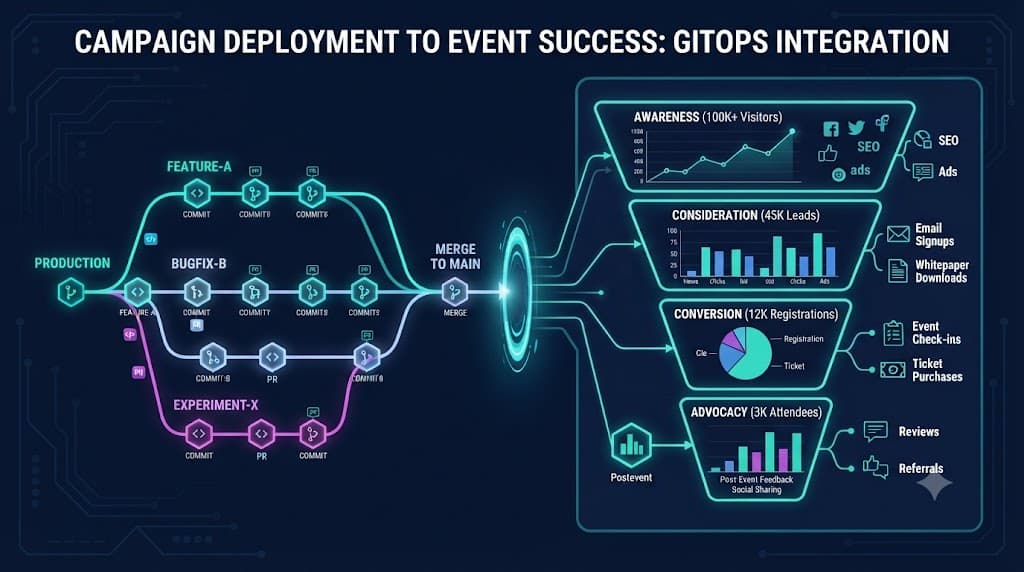
This legacy method breaks down rapidly at scale. When multiple team members make concurrent updates to shared marketing infrastructure, configuration drift occurs. One person overwrites another's changes, webhook secrets expire without notification, and tracking parameters fall out of alignment. Applying DevOps principles to these workflows introduces accountability. Every modification to an event's structure requires a pull request, undergoes automated validation checks against schema definitions, and is reviewed by designated team leads before ever reaching production. By leveraging GitHub as the single source of truth, organizations gain complete visibility into who changed what, when, and why.
Definition and Core Principles
Marketing Ops as Code is an architectural philosophy that codifies marketing workflows, event metadata, audience segmentation rules, and third-party integration mappings into declarative configuration files. These files reside within version-controlled repositories and are synchronized with underlying marketing technology stacks through automated execution engines. To successfully implement this paradigm, teams must adhere to four core principles:
- Reproducibility: Spinning up a carbon copy of an entire event ecosystem—including landing pages, email drip sequences, form validation schemas, and analytics tracking endpoints—should be achievable via a single execution command or automated trigger.
- Auditability: Every alteration made to a marketing campaign must leave an immutable cryptographic trace. Git commit histories provide granular insight into state transitions over time, making compliance and post-mortem analysis straightforward.
- Peer Review: No configuration change should bypass human verification. Pull requests enable cross-functional review, ensuring that legal disclaimers, brand guidelines, and technical parameters are verified prior to deployment.
- Automation: Manual deployment steps are eliminated entirely. CI/CD runners handle the heavy lifting of parsing code, validating syntax, provisioning resources, and syncing state with external APIs.
By enforcing these pillars, marketing operations evolve from a reactive, firefighting discipline into an engineering-grade function capable of supporting enterprise-scale growth initiatives without compromising stability.
How It Works: The GitHub Architecture
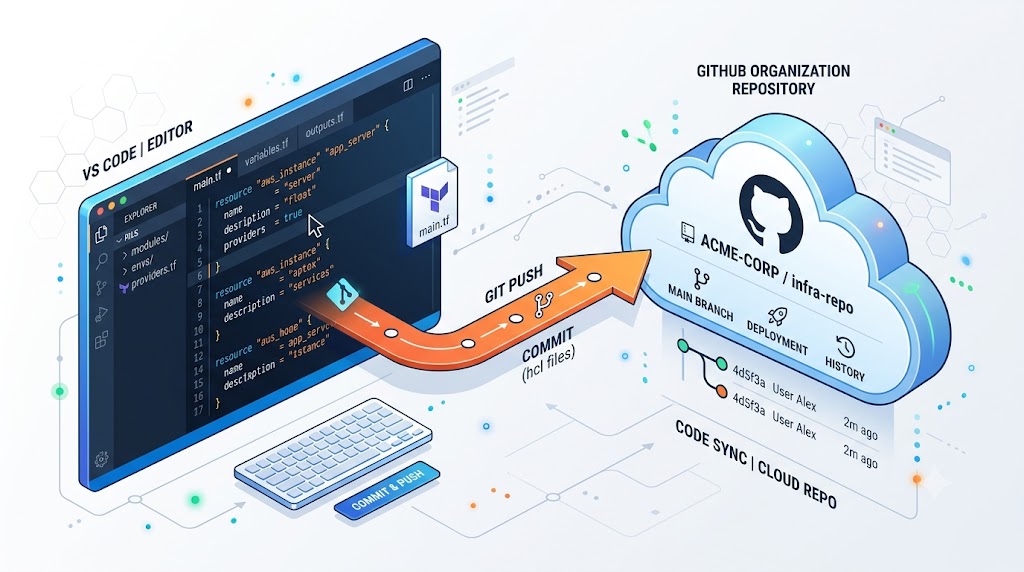
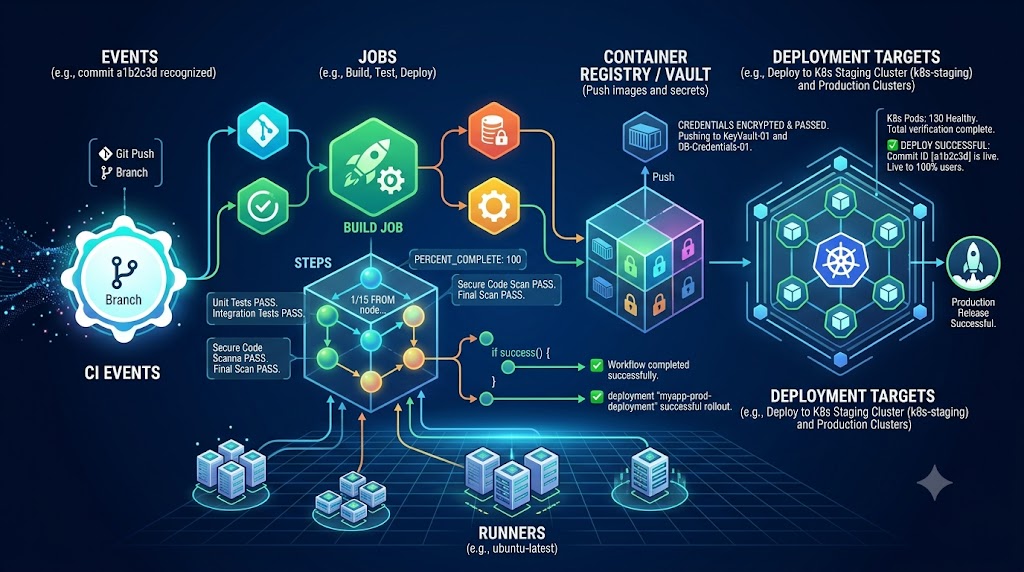
Orchestrating event management through GitHub relies on a decoupled architecture where Git repositories act as the declarative state layer, and GitHub Actions serve as the procedural execution engine. When a marketer or developer modifies a campaign specification file, GitHub detects the push or pull request event and initiates a predefined workflow.
This pipeline decouples intent from execution. The configuration files residing in the repository do not contain raw API keys or hardcoded production credentials. Instead, they reference encrypted repository secrets and environment variables managed securely within GitHub settings. When a pull request is merged into the main branch, the orchestration workflow reads the declarative event specification, transforms the payload into the required format for various vendor endpoints, and dispatches authenticated API requests to provision landing pages, configure calendar invites, and register webhooks.
Core Components and Workflow Templates
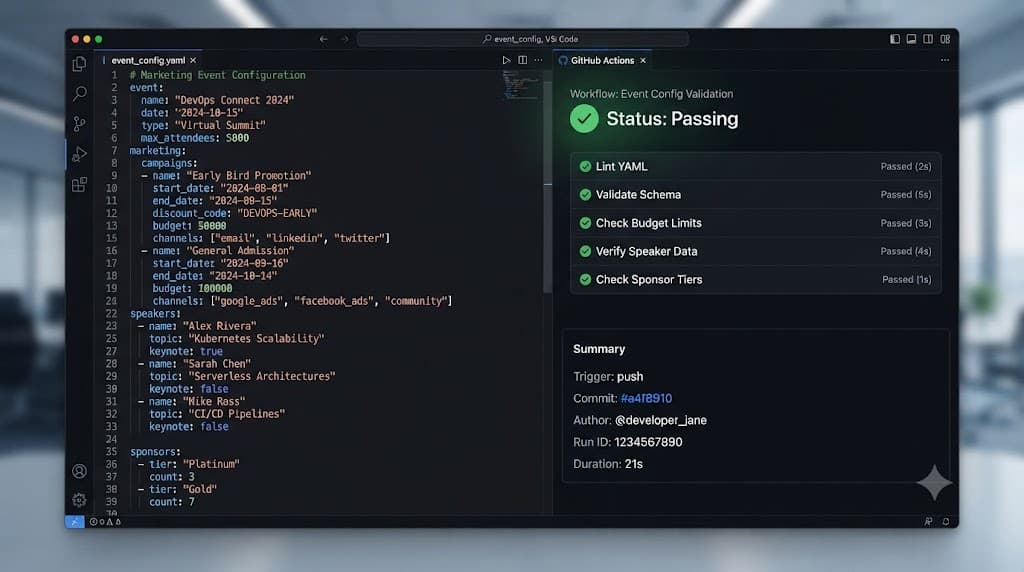
A production-grade marketing ops setup on GitHub requires a standardized directory structure and robust workflow templates. Maintaining clean separation between event definitions, schema validators, and deployment scripts ensures that the repository remains maintainable as your catalog of events expands.
Consider a standard repository layout designed for automated event operations:
├── .github/
│   └── workflows/
│       └── deploy-event.yml
├── schemas/
│   └── event-schema.json
├── events/
│   ├── Q3-product-launch/
│   │   ├── config.yaml
│   │   └── assets/
│   └── developer-workshop/
│       ├── config.yaml
│       └── assets/
└── scripts/
    └── validate-payload.py
The core of this structure is the event configuration file (config.yaml), which declares all parameters for a specific event. Below is a production-grade template demonstrating how event metadata, registration limits, speaker details, and webhook integrations are declared as code:
version: "v1"
event:
  slug: "developer-workshop-2026"
  title: "Scaling Marketing Ops with Git"
  date: "2026-09-15T14:00:00Z"
  timezone: "UTC"
  capacity: 500
  registration:
    form_fields:
      - name: "email"
        type: "email"
        required: true
      - name: "company"
        type: "text"
        required: false
  integrations:
    crm:
      provider: "hubspot"
      list_id: "109482"
    analytics:
      ga_tracking_id: "G-MARKETINGOPS"
    webhooks:
      - endpoint: "https://api.internal.service/v1/event-sync"
        secret_ref: "INTERNAL_WEBHOOK_SECRET"
This declarative approach ensures that every attribute of the event is clearly readable, versioned, and validated against the system schema before any deployment script attempts to interact with third-party APIs.
Practical Implementation Example
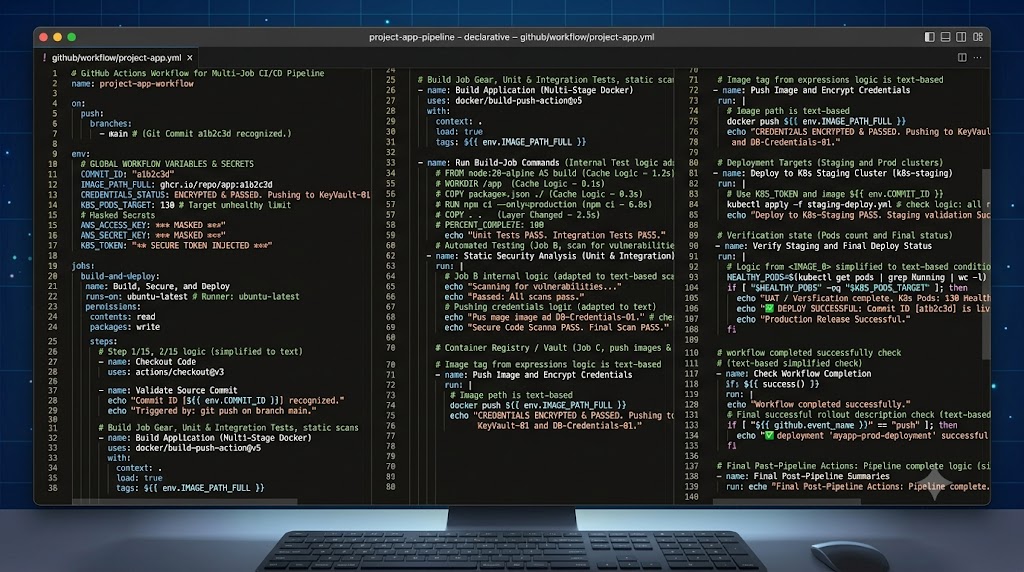
Implementing an automated event management pipeline on GitHub requires connecting your repository declarations to an active CI/CD execution script. Below is a fully functional GitHub Actions workflow template designed to validate event configurations against a JSON schema and synchronize them with external marketing infrastructure upon merging to the main branch.
name: Deploy Marketing Events

on:
  push:
    branches: [ "main" ]
    paths:
      - 'events/**'
  pull_request:
    branches: [ "main" ]
    paths:
      - 'events/**'

jobs:
  validate-and-deploy:
    runs-on: ubuntu-latest
    steps:
      - name: Checkout Code
        uses: actions/checkout@v4

      - name: Set up Python
        uses: actions/setup-python@v5
        with:
          python-version: '3.11'

      - name: Install Dependencies
        run: |
          pip install jsonschema pyyaml requests

      - name: Validate Event Configs
        run: |
          python scripts/validate-payload.py

      - name: Sync with Event APIs
        if: github.event_name == 'push' && github.ref == 'refs/heads/main'
        env:
          HUBSPOT_API_KEY: ${{ secrets.HUBSPOT_API_KEY }}
          INTERNAL_WEBHOOK_SECRET: ${{ secrets.INTERNAL_WEBHOOK_SECRET }}
        run: |
          python scripts/sync-events.py
[!TIP] Pro Tip: Always split your validation and deployment steps into separate conditional blocks. Running validation checks on every pull request prevents invalid configurations from ever polluting your production environment.
When a contributor opens a pull request altering an event's capacity or webhook destination, the validate-payload.py script executes immediately. If the YAML syntax violates the defined schema—such as missing a required field or providing an invalid date format—the GitHub check fails instantly, blocking the merge and providing clear feedback to the author.
Benefits of Developer Tooling for Marketing
Adopting DevOps practices for marketing team automation unlocks profound operational efficiencies that traditional GUI-driven workflows simply cannot match. By centralizing event management within version-controlled repositories, organizations eliminate the chaos of scattered spreadsheets and unmonitored SaaS dashboards.
✓ Advantages
- Complete version history and auditability for every campaign modification.
- Automated error prevention through strict schema validation and linters.
- Seamless cross-functional collaboration between developers and marketers.
- Instant disaster recovery and rollback capabilities via Git revert.
✕ Limitations
- Steeper initial learning curve for non-technical marketing professionals.
- Requires robust internal governance to maintain clean repository structures.
- API rate limits and provider constraints can impact massive batch syncs.
- Debugging failed deployments requires familiarity with CI/CD logs.
Furthermore, developer tooling facilitates unprecedented speed through reusability. Once a robust event template is established, launching subsequent webinars, product showcases, or regional meetups becomes as simple as duplicating a folder, modifying core parameters, and opening a pull request. This standardization ensures brand consistency, rigorous tracking implementation, and compliance with data privacy regulations across every single initiative.
Limitations and Potential Risks
While managing marketing operations through code offers transformative advantages, it is not without potential risks and inherent limitations. Organizations must approach this transition with a clear understanding of the operational friction points that can arise.
[!WARNING] Security Warning: Never store plaintext API tokens, database connection strings, or third-party client secrets inside event configuration files. Always utilize encrypted repository secrets or secure secret management vaults.
The most immediate challenge is cultural adoption. Marketing professionals who are accustomed to intuitive drag-and-drop builders may experience friction when interacting with Git interfaces, Markdown files, and command-line tools. Providing intuitive abstraction layers, internal documentation, and training sessions is vital to bridge this gap. Additionally, external API dependencies introduce systemic vulnerabilities. If a critical marketing SaaS provider experiences an outage or alters its REST endpoints unexpectedly, automated synchronization pipelines may fail, requiring rapid intervention from engineering teams to update integration scripts.
Conclusion
Transitioning from fragile, ad-hoc SaaS integrations to a rigorous, version-controlled architecture represents a monumental leap forward for modern growth teams. By applying developer tooling and automation principles to campaign orchestration, organizations can eliminate configuration drift, enhance cross-functional collaboration, and safeguard critical revenue pipelines against human error. As marketing ecosystems continue to scale in complexity, adopting a code-first mindset is no longer reserved exclusively for software engineering—it is the definitive foundation for resilient, enterprise-grade marketing operations.
Topics Covered
Frequently asked questions
Marketing Ops as Code is an architectural approach that applies DevOps principles—such as version control, automated testing, and peer review—to marketing workflows, campaign configurations, and event management instead of relying on manual, GUI-driven SaaS dashboards.
Recommended next