Quick Answer
Resource management in container orchestration has traditionally operated on a strictly container-centric model. With the official release of Kubernetes v1.37, the Pod-Level Resource Managers feature has graduated to Beta status following its initial introduction as an Alpha feature in Kubernetes v1.36. While this transition represents a major milestone for cluster operators managing complex workloads, it is important to note that the feature remains disabled by default. This deep dive explores the foundational shift toward treating a pod as a cohesive resource allocation unit rather than an isolated collection of individual containers.
Introduction to Pod-Level Resource Managers in Kubernetes v1.37
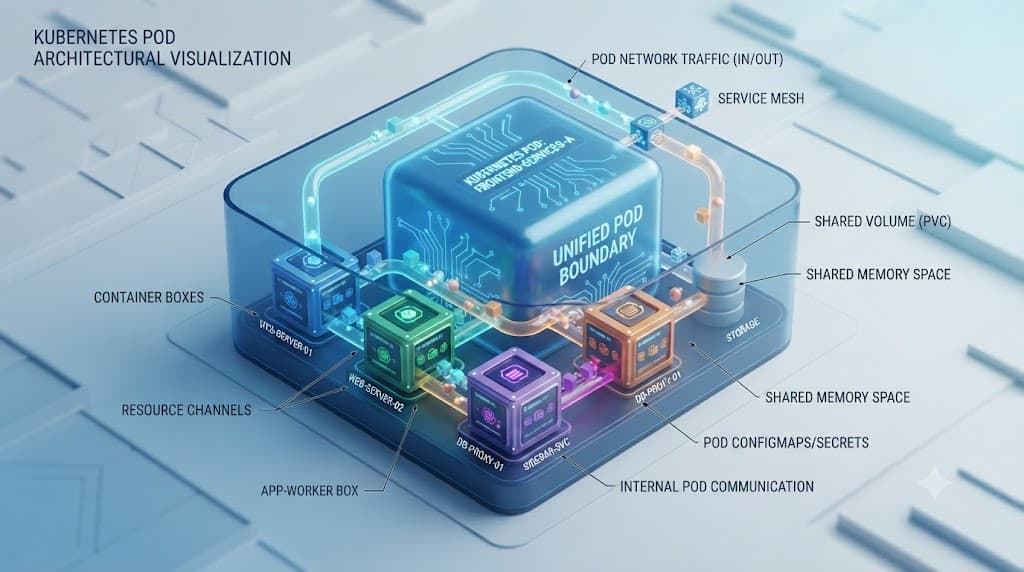
The graduation of Pod-Level Resource Managers to Beta in Kubernetes v1.37 marks a pivotal evolution in how modern cloud-native environments handle compute resources. Historically, computing limits and requests were strictly evaluated per container. This design created friction for sidecar patterns, data-intensive workloads, and complex telemetry agents that shared lifecycles with primary application containers. By shifting tracking logic upward, cluster administrators can now implement policies that govern the entire pod boundary.
Building directly upon the underlying architecture established by Pod-Level Resources, this feature equips the kubelet and underlying resource managers with the intelligence needed to account for overhead and dynamic allocations collectively. Although the feature is ready for testing in staging environments, its disabled-by-default status reflects the rigorous validation required before widespread production adoption.
[!NOTE] Architectural Background: Pod-Level Resources laid the initial schema groundwork by allowing infrastructure overhead to be declared at the pod spec level. Pod-Level Resource Managers now bring active runtime enforcement and tracking to those specifications.
How Pod-Level Resource Managers Work
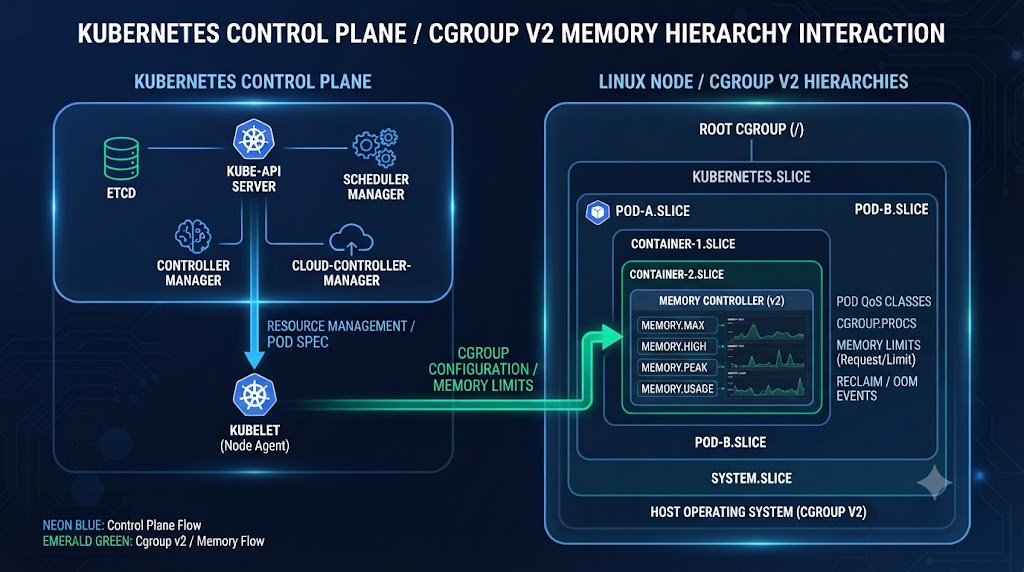
Understanding the inner workings of this capability requires analyzing the relationship between the Kubernetes scheduler, the API server, and the kubelet's internal allocation loops. Traditional resource tracking aggregates container requests independently, often resulting in fragmented allocations where idle resources in a sidecar container cannot be utilized by the primary workload.
With Pod-Level Resource Managers active, resource accounting transitions down to shared control groups (cgroups v2). The kubelet coordinates with device plugins and memory managers to allocate a collective budget to the pod sandbox. This prevents strict resource starvation across tightly coupled containers and optimizes hardware utilization on dense node topologies.
✓ Advantages
- Optimized sharing between sidecars and main apps
- Unified cgroups v2 resource accounting
- Reduced fragmentation in high-density clusters
✕ Limitations
- Disabled by default in v1.37
- Requires modern Linux kernels with cgroups v2
- Potential debugging complexity for legacy tooling
Enabling and Managing the Beta Feature
Because Pod-Level Resource Managers ship in a disabled state during the Beta phase, platform engineers must explicitly opt-in to evaluate their performance. Enabling the feature requires updating the kubelet configuration flags across your worker nodes along with the corresponding feature gate declarations in the control plane components.
[!WARNING] Production Warning: Enabling experimental beta features in production clusters can introduce unexpected node pressure behaviors or scheduling anomalies. Always test thoroughly in dedicated staging environments first.
To activate the feature, ensure your cluster runs a compatible container runtime and a Linux kernel fully supporting cgroups v2 unified hierarchy. When configuring your feature gates, explicitly add PodLevelResources=true alongside the resource manager specifications. Monitor kubelet logs closely for any allocation rejections or device plugin negotiation errors during initial rollout phases.