Quick Answer
Modern enterprises face a continuous balancing act. They must drive digital transformation forward while maintaining the absolute stability, security, and performance required by core transaction systems. For decades, IBM Z and LinuxONE environments have served as the bedrock for mission-critical workloads in finance, healthcare, and government. However, as organizations expand their hybrid cloud strategies, managing these powerful enterprise systems alongside modern distributed architectures can introduce significant operational friction. Traditional provisioning pipelines often struggle with the specialized domain knowledge required to provision and manage resources on IBM Z, leading to siloes between mainframe specialists and modern DevOps teams.
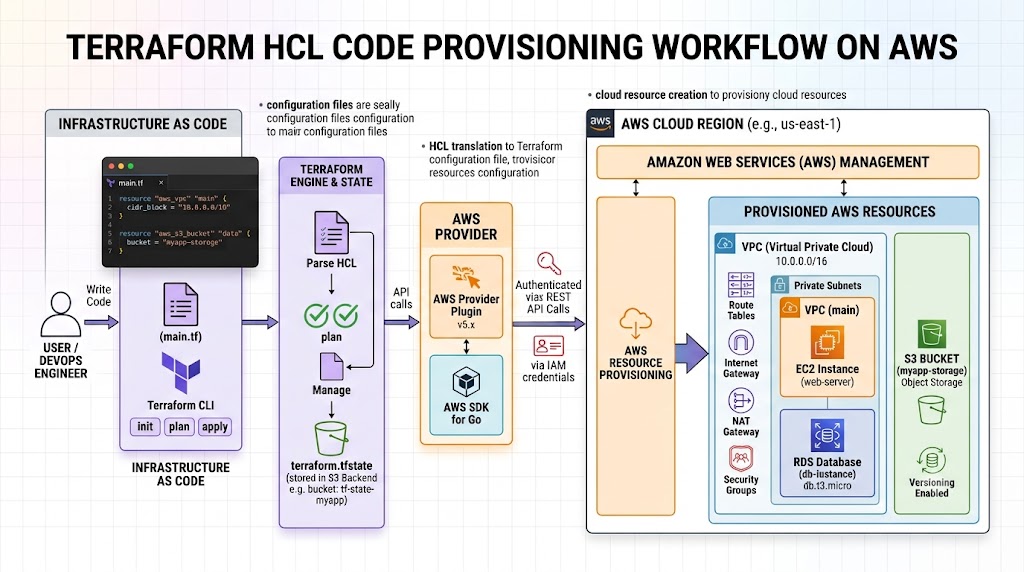
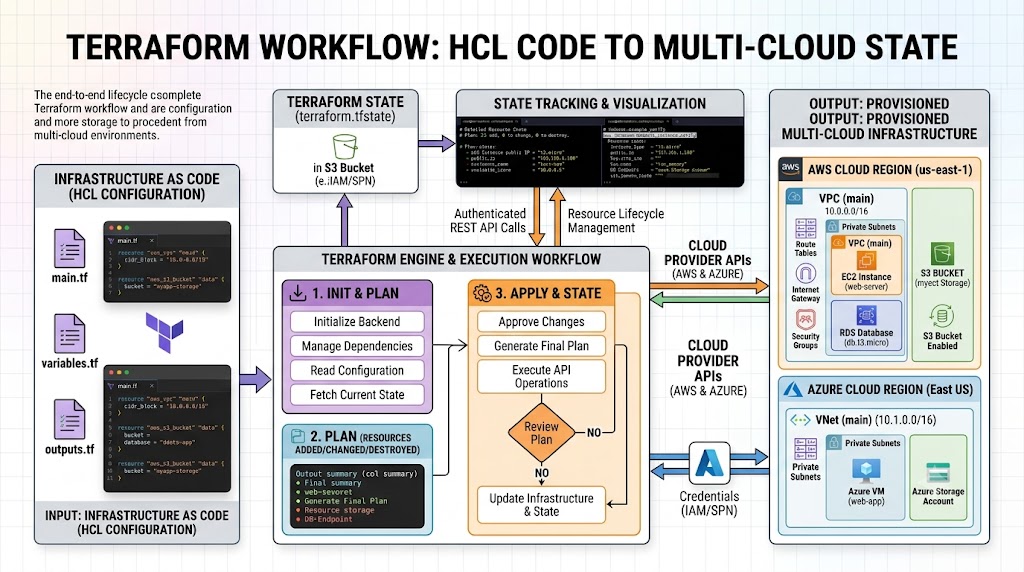
Infrastructure as Code (IaC) has transformed how teams define and deploy cloud resources, bringing version control, repeatability, and transparency to provisioning. Yet, extending these practices seamlessly to mainframe and high-performance hybrid environments often requires writing complex, hyper-specific configuration scripts. Platform engineers frequently find themselves bogged down by low-level implementation details rather than focusing on the desired business outcomes. Bridging this gap requires an evolution in how automation interacts with enterprise hardware, shifting the paradigm from rigid, imperative execution scripts toward abstract, high-level declarations.
Introduction to Modern Infrastructure on IBM Z
Enterprise IT leaders are under constant pressure to accelerate software delivery without compromising the unyielding reliability expected from IBM Z mainframes. Modernizing these environments means adopting cloud-native operational models where infrastructure can be spun up, scaled, and decommissioned with the same agility seen in public cloud environments. However, the underlying architecture of IBM Z and LinuxONE involves specialized subsystems, cryptographic coprocessors, and logical partitions (LPARs) that demand precise configuration.
[!NOTE] Architectural Note: IBM Z environments run mission-critical workloads requiring specialized hardware features like z/OS coupling facilities or dedicated LinuxONE crypto cards, making standardized automation uniquely challenging.
When DevOps teams attempt to manage these environments using traditional scripts, they often encounter steep learning curves. Each subsystem can require distinct tooling and deep platform expertise. This complexity creates bottlenecks, slowing down release cycles and increasing the risk of configuration drift or human error. To solve this, organizations need a unified control plane that abstracts hardware specifics while retaining the rigorous compliance and security controls inherent to enterprise mainframes.
How Intent-Driven Workflows Transform Terraform for Z
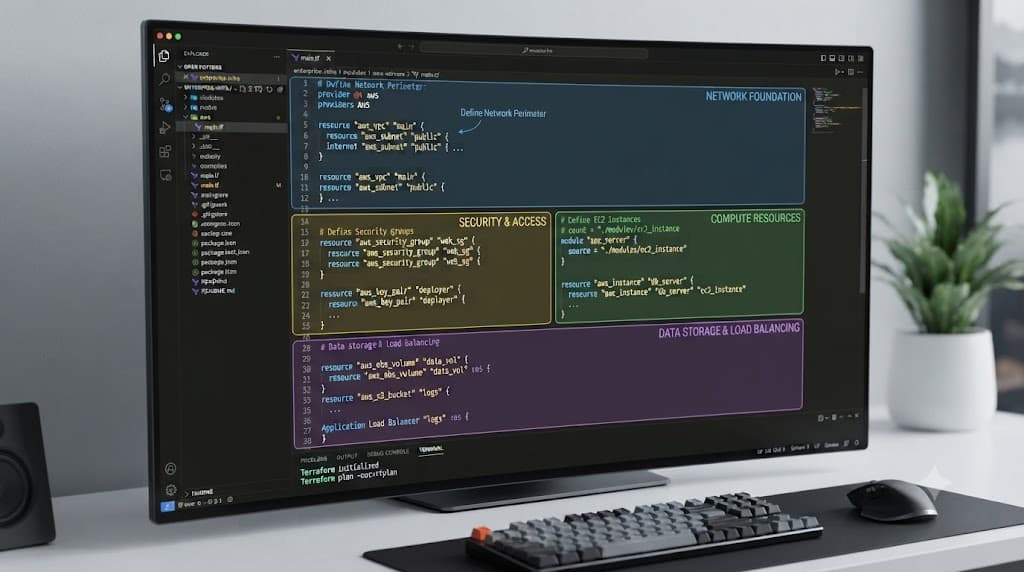
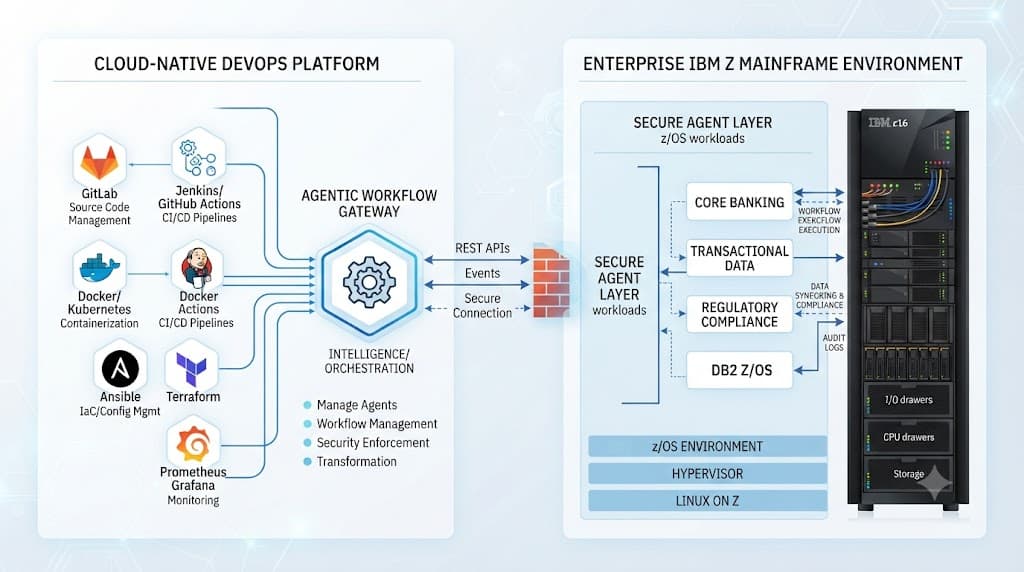
To overcome the friction of managing hybrid infrastructure, Terraform Self-Managed for IBM Z introduces intent-driven workflows. Instead of manually scripting every granular parameter required to provision a resource, engineers express their desired business objective or operational intent. Agentic workflows interpret this high-level intent, orchestrating the underlying configuration steps automatically.
This agentic approach acts as a bridge between high-level cloud-native tooling and low-level mainframe management. For instance, rather than specifying individual channel path identifiers or complex storage parameters, a platform engineer can declare an application workload requirement. The intent-driven workflow translates that declaration into compliant, secure resource allocations across z/OS or LinuxONE environments.
✓ Advantages
- Reduced need for specialized mainframe scripting expertise
- Consistent policy enforcement across hybrid cloud estates
- Faster provisioning times for complex enterprise workloads
- Minimized configuration drift and human error
✕ Limitations
- Initial migration requires mapping existing legacy scripts
- Teams must adapt to intent-based abstraction models
- Requires governance over agentic workflow permissions
By leveraging Terraform within these agentic pipelines, organizations unify their operational workflows. Developers use the exact same declarative language they rely on for cloud infrastructure, while enterprise architects maintain centralized governance and security over core systems.
Benefits and Best Practices for Implementation
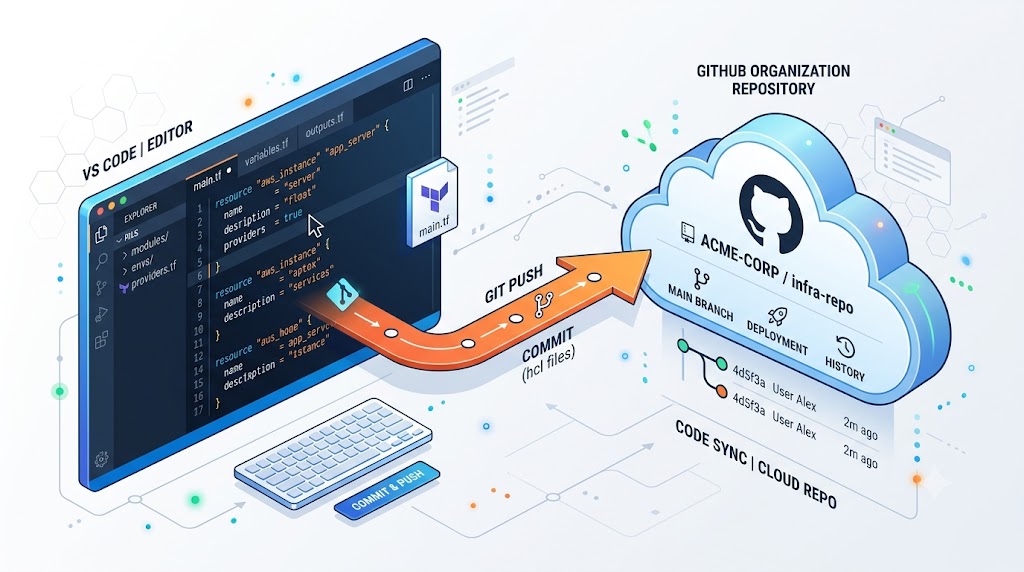
Adopting intent-driven workflows for IBM Z yields immediate operational benefits, but successful implementation requires a structured strategy. The primary advantage is democratization: developers and platform engineers can provision resources securely without needing a decade of specialized mainframe experience. This dramatically reduces lead times for feature delivery and streamlines compliance auditing, as every infrastructure change is tracked within version-controlled repositories.
[!TIP] Pro Tip: Start by applying intent-driven workflows to non-production LinuxONE sandboxes before rolling them out to mission-critical production z/OS environments.
To maximize these gains, organizations should follow core best practices:
- Establish Clear Policies Early: Define compliance and security guardrails using policy-as-code frameworks before deploying agentic workflows into production.
- Foster Cross-Team Collaboration: Bring mainframe administrators and cloud platform engineers together to define the high-level intent templates.
- Iterative Adoption: Begin with standard provisioning tasks, such as creating isolated testing environments, before tackling complex multi-tier application architectures.
By carefully aligning governance with modern automation, enterprises can future-proof their hybrid architectures, ensuring that IBM Z and LinuxONE remain agile, responsive participants in the modern application lifecycle.